Thyroid Ablation: Everything You Need to Know
What is Thyroid Ablation?
Thyroid ablation is a modern, non-surgical treatment used to shrink or eliminate thyroid nodules. Rather than removing part or all of the thyroid gland, this approach targets the nodule directly. Heat or, in some cases, a medical alcohol called ethanol is applied to the nodule, causing it to shrink gradually over time.
The most widely used and proven technique is radiofrequency ablation (RFA). This treatment is increasingly offered as an alternative to surgery for patients with benign thyroid nodules who want effective symptom relief while preserving normal thyroid function. Patients with small (<1-1.5cm) thyroid cancers may also benefit from this technique.
Thyroid nodules are common and usually benign. While many nodules cause no problems, others can lead to neck discomfort, pressure, difficulty swallowing, or visible swelling. Thyroid ablation offers a safe and effective option for managing these symptoms without surgery.


Who May Be Suitable for Thyroid Ablation?
- Thyroid ablation may be an option if you have a benign thyroid nodule that is causing symptoms or cosmetic concerns. These may include neck discomfort, a feeling of pressure, difficulty swallowing, or a visible lump in the neck. Thyroid ablation may also be an option if you have a small thyroid cancer, < 1.0 – 1.5 cm in size. Not all thyroid nodules are suitable for ablation. Suitability depends on several factors, including:
- Biopsy results
- Size, type, and position of the nodule
- Ultrasound characteristics
- Your symptoms, health history, and treatment goals
A careful assessment is essential to ensure safe and effective treatment. This typically includes ultrasound imaging and one or more biopsies. Dr Sinclair will review these results with you and explain whether thyroid ablation is appropriate in your case.
Dr Sinclair is internationally recognised for her expertise in thyroid ablation and provides clear, personalised guidance throughout the assessment process. She is also a thyroid surgeon and is therefore uniquely qualified to provide information about all available treatmnet options and to individualise care.

Booking an Appointment
Dr Sinclair consults in Melbourne and Sydney, with telehealth appointments available for interstate and international patients. This allows patients across Australia and overseas to access expert advice and care.
How Is Thyroid Nodule Ablation Performed?
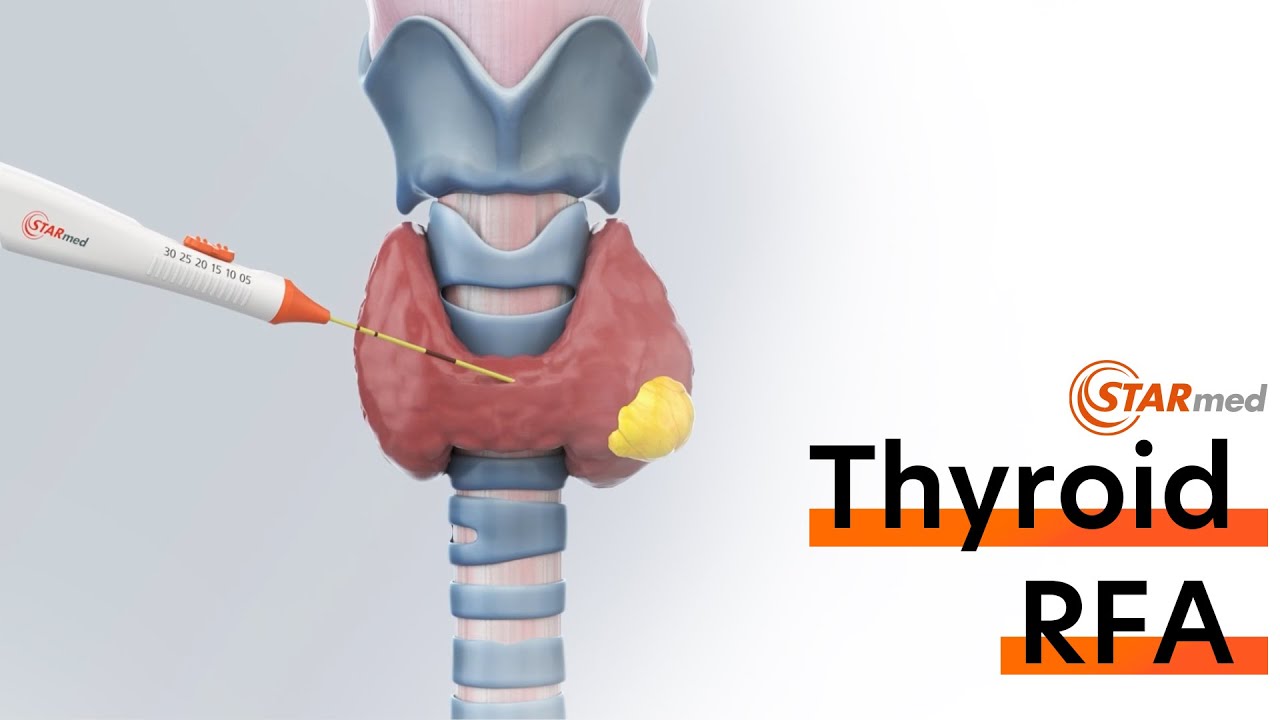
Radiofrequency ablation is a minimally invasive procedure carried out under local anaesthesia. Ultrasound imaging is used throughout the procedure to guide treatment and protect surrounding structures.
During the procedure:
- The skin over the neck is numbed to ensure comfort
- A thin probe is carefully inserted into the thyroid nodule
- The probe delivers controlled heat to treat the nodule tissue
- Surrounding healthy thyroid tissue is preserved
The treated tissue is gradually absorbed by the body, causing the nodule to shrink over time. Because the rest of the thyroid gland remains intact, hormone production is usually unaffected.
The procedure typically takes less than one hour. It does not require stitches and is performed on an outpatient basis, allowing patients to return home the same day.

Are There Any Risks or Complications?
Thyroid ablation is considered very safe when performed by an experienced specialist using real-time ultrasound guidance. Complications are uncommon and are usually mild or temporary.
Possible risks include:
- Mild pain or tenderness at the treatment site
- Temporary swelling or bruising in the neck
- Temporary voice changes caused by nerve irritation
- Minor bleeding or a small haematoma
- Rare skin irritation or burns
- Extremely rare injury to nearby structures such as the trachea or oesophagus
Dr Sinclair has developed advanced voice monitoring protocols for use during thyroid ablation. These safety measures are now adopted by practitioners worldwide and help further reduce the risk of voice-related complications.

Contact Us
Please reach out for enquiries and consultations regarding thyroid nodule ablative treatments.